|
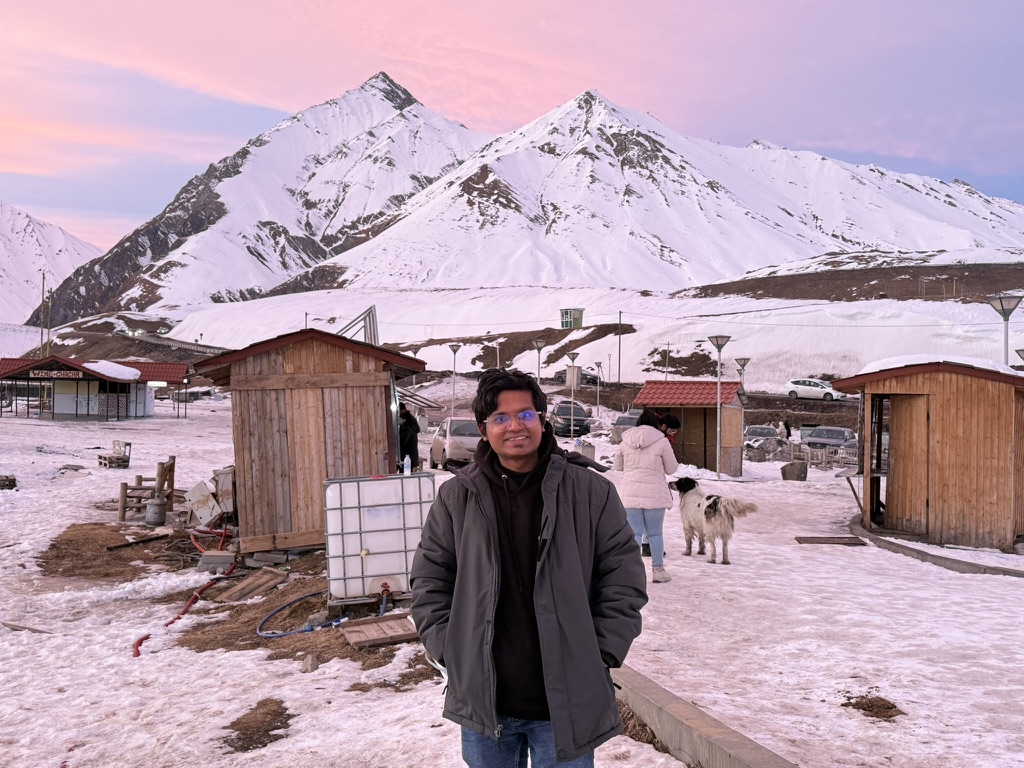
Mukul Ranjan I am a first-year PhD student in ECE at Cornell University, where I work with Prof. Udit Gupta on hardware-software co-design. My research focuses on efficient machine learning systems, particularly developing alternate architectures and hardware-aware algorithms through sparsity and quantization. I also work on creating evaluation methodologies and benchmarks for these systems. Previously, I completed my MS in Machine Learning at MBZUAI, where I worked with Prof. Zhiqiang Shen, Prof. Praneeth Vepakomma, and Prof. Nils Lukas. I also worked with Prof. Deming Chen at UIUC from Jul. 2025 to Oct. 2025. Before that, I was a Data Scientist at Meesho, where I built personalized ranking systems, and an AI Research Scientist at Qure.ai, developing automated stroke severity assessment systems deployed in hospitals worldwide. I hold a B.Tech. in Electronics and Communication Engineering from IIT Guwahati. Email / CV / Scholar / Github / LinkedIn / X / Medium / Blogs / Poetry |
|
News
Sep 2026
NewFlash-dLLM accepted at NeurIPS 2026!
Aug 2026
NewAwarded the Irwin Jacobs Fellowship by Cornell University.
Aug 2026
NewStarted PhD in ECE at Cornell University.
May 2026
NewReceived the Department Chair's Award at MBZUAI.
May 2026
NewGraduated from MBZUAI with MS in Machine Learning.
Feb 2026
Time-Blindness accepted at CVPR 2026!
Jan 2026
Elastic-Cache accepted at ICLR 2026!
Jan 2026
Mobile-MMLU accepted at DMLR 2026!
Oct 2025
Released Elastic-Cache, a training-free strategy that accelerates Diffusion LLMs up to 45.1x.
Jul 2025
Joined UIUC as a Research Scholar, working with Prof. Deming Chen on hybrid LLM inference.
May 2025
Released Time-Blindness! All VLMs score 0% on temporal patterns humans recognize at 98%.
Mar 2025
Released Mobile-MMLU, a 16K+ question benchmark for evaluating LLMs on mobile scenarios.
Feb 2025
KITAB-Bench accepted at ACL 2025!
Oct 2024
Won 1st place ($11,000) at the GITEX DGE Elite Hackathon for Cybersecurity.
Sep 2024
Won 1st place ($3,000) at the Insilico Medicine AI-driven Drug Discovery Hackathon.
Aug 2024
Started MS in Machine Learning at MBZUAI.
Feb 2022
Joined Meesho as a Data Scientist, building personalized ranking systems.
Dec 2021
Joined Qure.ai as an AI Research Scientist.
Jun 2021
Graduated from IIT Guwahati with B.Tech in ECE. Received Samsung Fellowship Award.
Mar 2021
Won Gold Medal at Inter-IIT Tech Meet for multilingual sentiment analysis.
|
PublicationsRepresentative papers are highlighted. * indicates equal contribution (random order). |
|
Flash-dLLM: IO-Aware KV Caching and Parallel Decoding for Fast, Memory-Efficient Diffusion LLMs
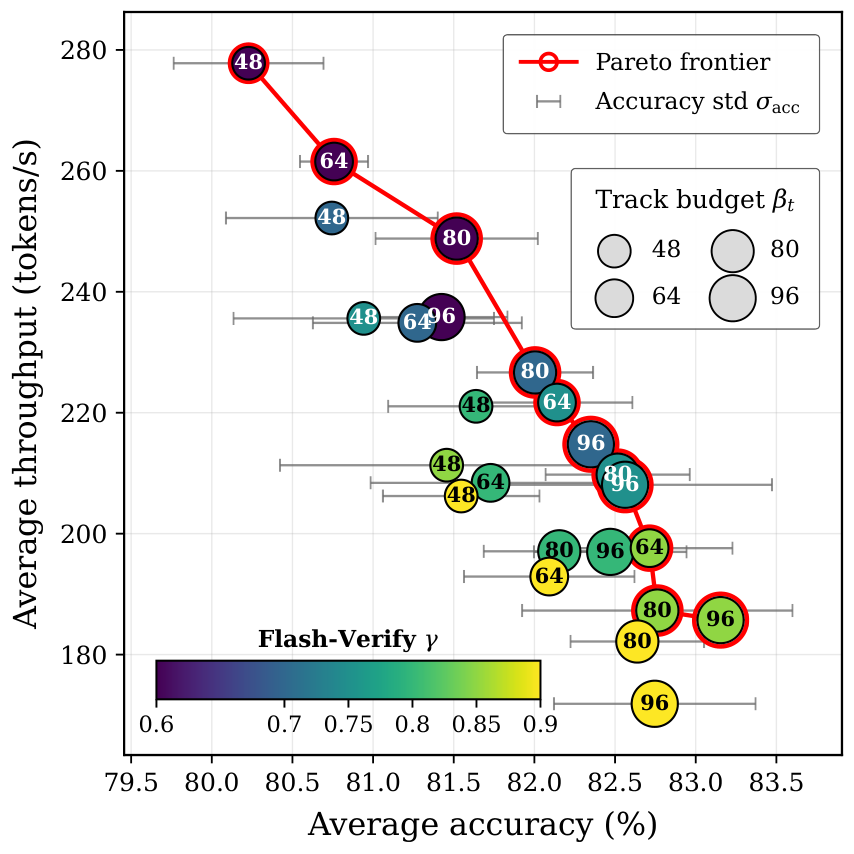
Quan Nguyen-Tri, Mukul Ranjan, and Zhiqiang Shen NeurIPS, 2026 arXiv / code Flash-dLLM is a training-free framework that pairs an I/O-aware fused KV-cache kernel with draft-and-verify parallel decoding, achieving 5.1x and 11.0x speedups over Elastic-Cache on GSM8K and HumanEval. |
|
Attention Is All You Need for KV Cache in Diffusion LLMs
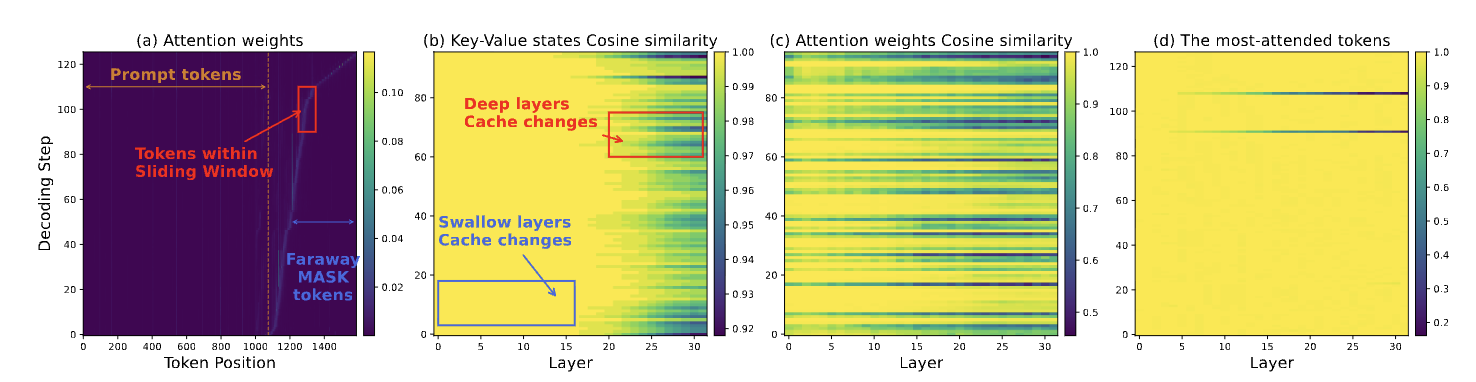
Mukul Ranjan*, Quan Nguyen-Tri*, and Zhiqiang Shen ICLR, 2026 arXiv / code / project page Elastic-Cache is a training-free framework that accelerates Diffusion LLMs up to 45.1x with higher accuracy by adaptively refreshing the KV cache. |
|
Time Blindness: Why Video-Language Models Can't See What Humans Can?
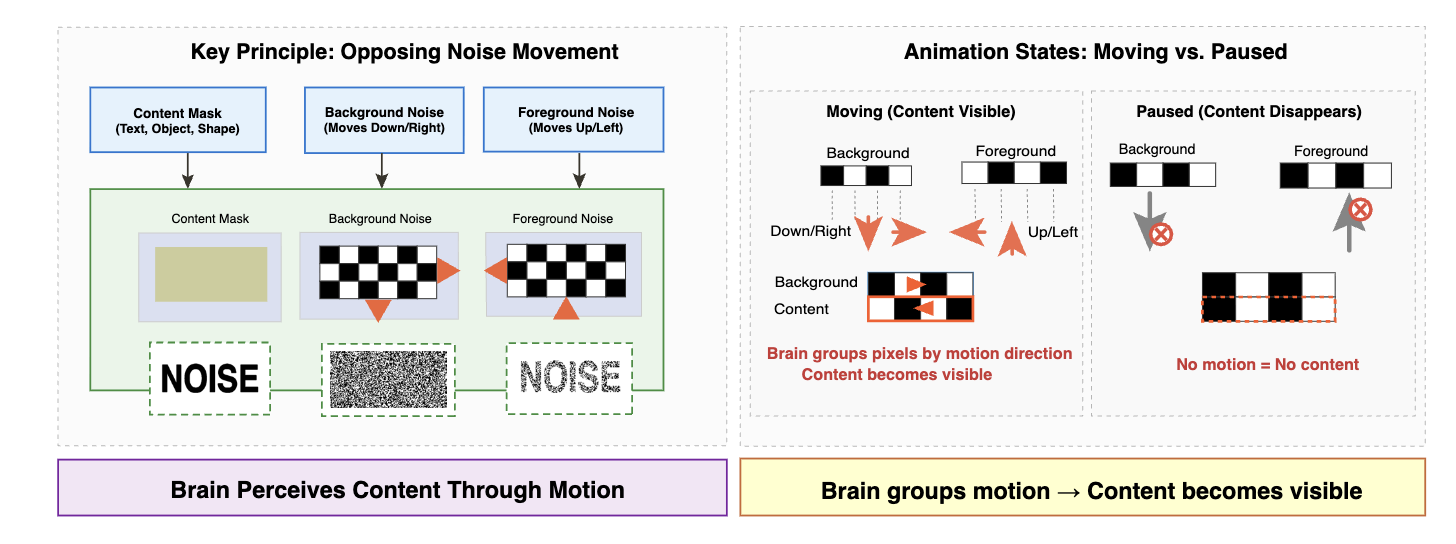
Mukul Ranjan*, Ujjwal Upadhyay*, Zhiqiang Shen, and Mohamed Elhoseiny CVPR, 2026 arXiv / code / project page SpookyBench reveals that patterns in temporal noise that humans recognize with 98% accuracy, state-of-the-art VLMs fails completely achieving 0%. |
|
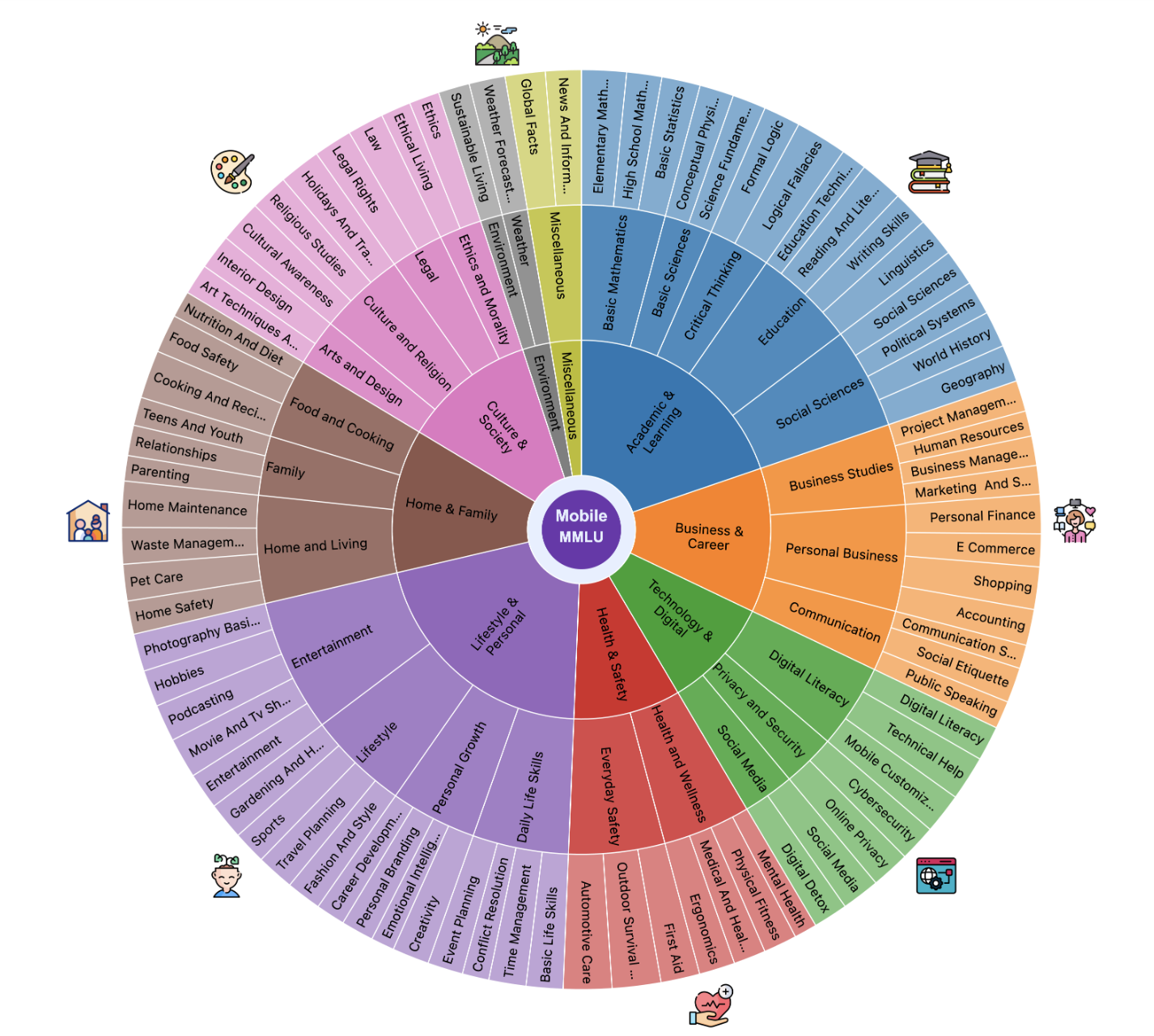
Mobile-MMLU: A Mobile Intelligence Language Understanding Benchmark
Mukul Ranjan*, Sondos Mahmoud Bsharat*, Aidar Myrzakhan*, et al. DMLR, 2026 arXiv / dataset / project page Mobile-MMLU is a benchmark with with 16,000+ questions across 80 mobile-related fields to evaluate LLM performance under real-world constraints. |
|
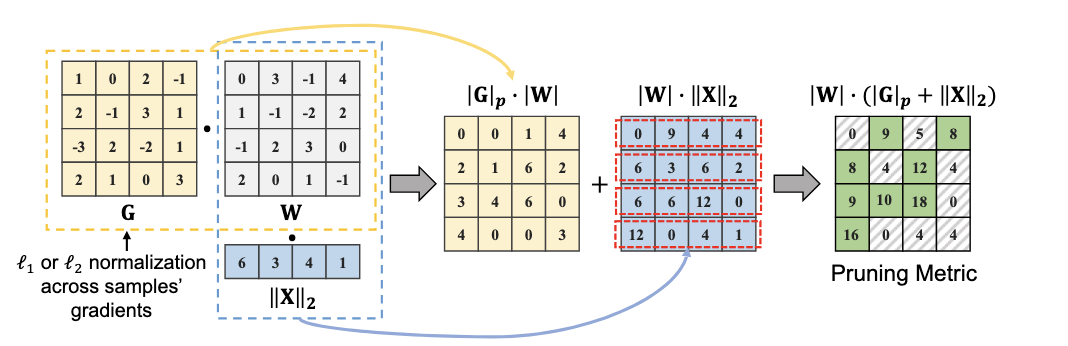
Beyond Size: How Gradients Shape Pruning Decisions in Large Language Models
Rocktim Jyoti Das*, Mukul Ranjan*, Mingjie Sun*, Liqun Ma, and Zhiqiang Shen Under Review arXiv (coming soon) / code GBLM-Pruner is a gradient-based pruning method that is extremeley faster than weight-update methods like SparseGPT. |
|
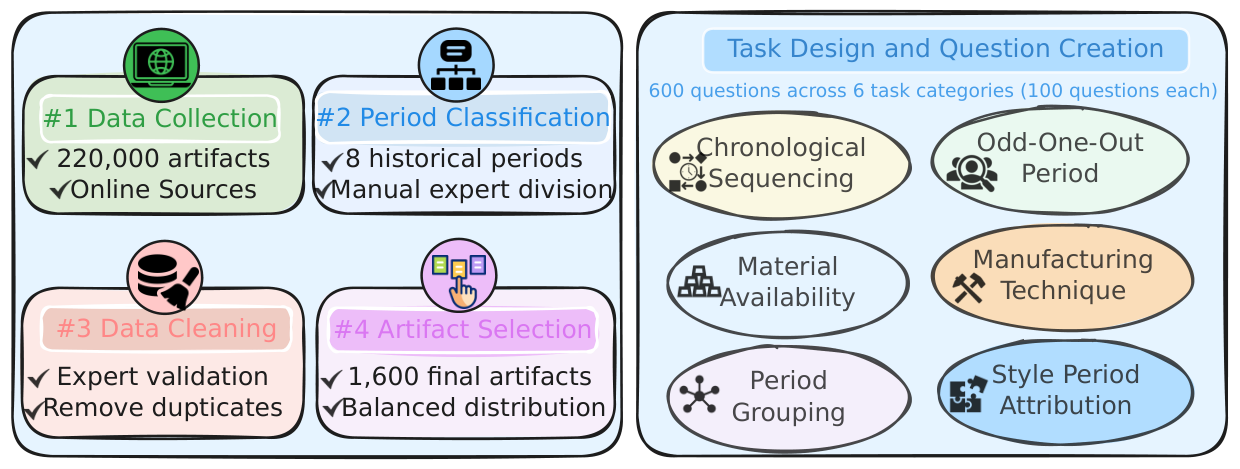
On the Cultural Anachronism and Temporal Reasoning in Vision Language Models
Mukul Ranjan, Prince Jha, Khushboo Kumari, and Zhiqiang Shen ACL 2026 (Findings), 2026 arXiv / paper / project page TAB-VLM is a benchmark of 600 questions over 1,600 Indian cultural artifacts that exposes cultural anachronism in VLMs; even the best model reaches only 58.7% accuracy. |
|
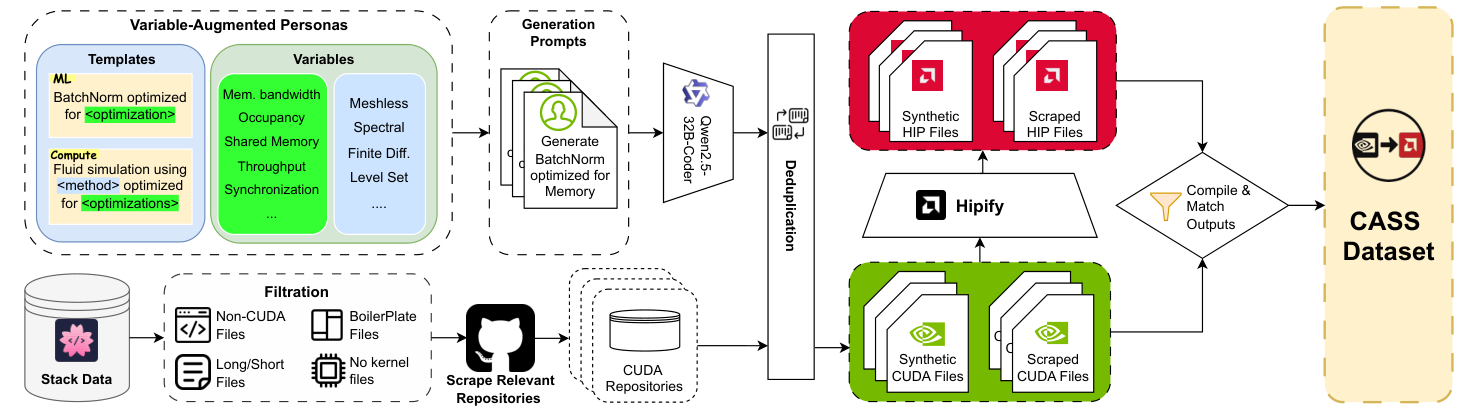
CASS: Nvidia to AMD Transpilation with Data, Models, and Benchmark
Ahmed Heakl, Gustavo Bertolo Stahl, Sarim Hashmi, Seung Hun Eddie Han, Mukul Ranjan, et al. ACL, 2026 arXiv / paper / code / dataset CASS is the first large-scale dataset and model suite for cross-architecture GPU code transpilation (CUDA to HIP, Nvidia SASS to AMD RDNA3), with 70k verified code pairs. |
|
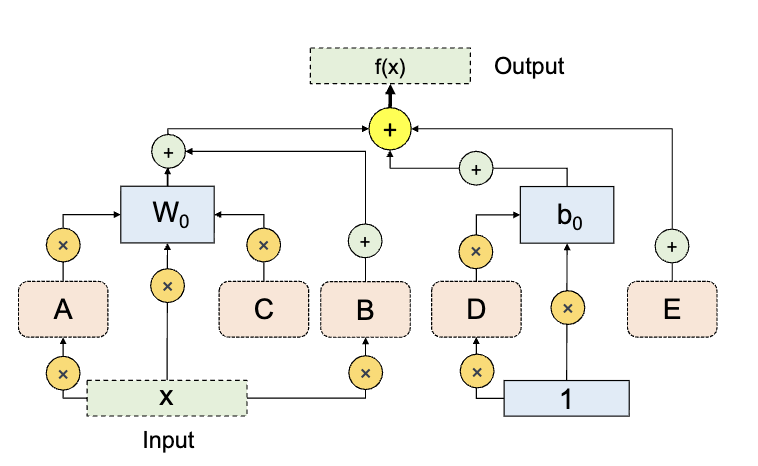
One-for-All: Generalized LoRA for Parameter-Efficient Fine-tuning
Arnav Chavan*, Mukul Ranjan*, Zhuang Liu, Deepak Gupta, Eric Xing, and Zhiqiang Shen Pending Submission for IEEE TPAMI, 2025 arXiv (coming soon) / code GLoRA is a unified PEFT framework achieving state-of-the-art accuracy with zero inference overhead through structural re-parameterization. |
|
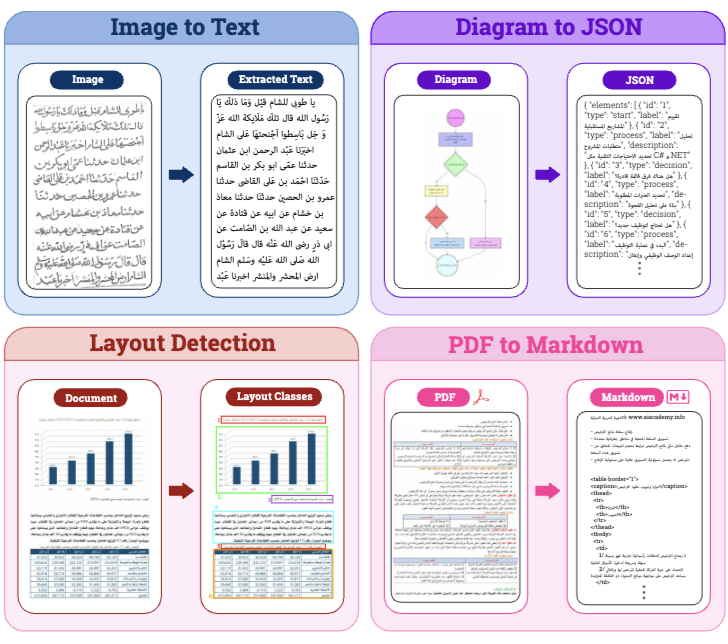
KITAB-Bench: A Comprehensive Multi-Domain Arabic OCR Benchmark
Mukul Ranjan*, Ahmed Heakl*, Muhammad Abdullah Sohail*, et al. ACL 2025 (Findings), 2025 arXiv / dataset KITAB-Bench has 8,809 samples across 9 domains. It reveals that vision-language models outperform traditional OCR by 60%. |
|
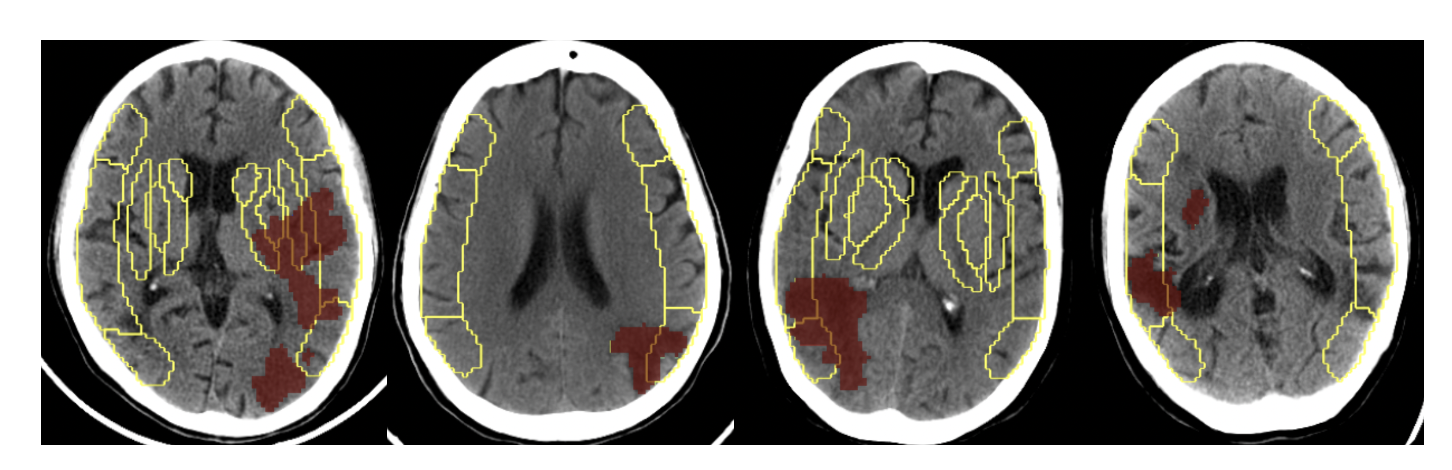
Deep-ASPECTS: A Segmentation-Assisted Model for Stroke Severity Measurement
Ujjwal Upadhyay, Mukul Ranjan, et al. ECCV, 2022 arXiv Deep-ASPECTS is an automated ASPECT scoring system achieving radiologist-level performance, now deployed in hospitals worldwide. |
|
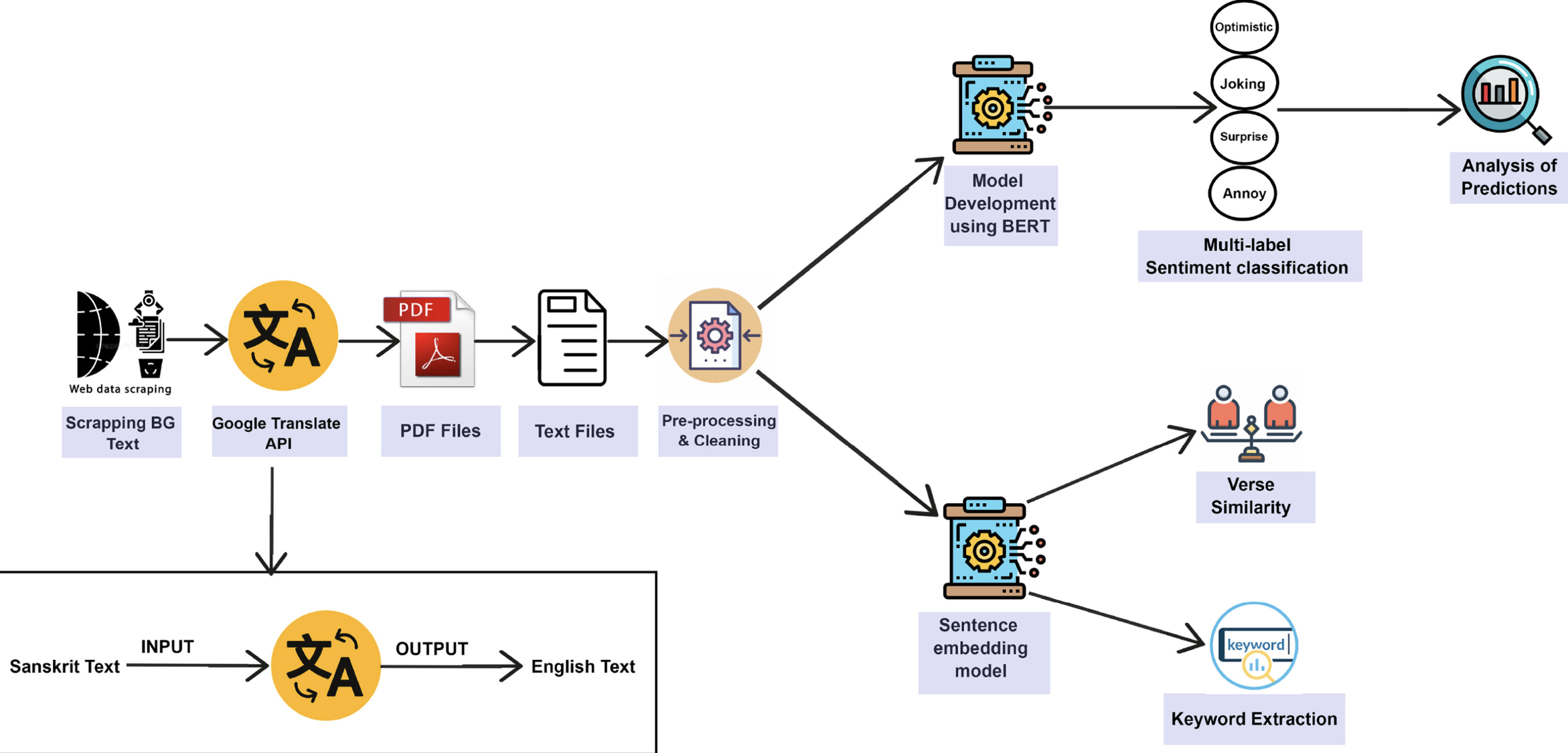
An Evaluation of Google Translate for Sanskrit to English Translation
Akshat Shukla, Chaarvi Bansal, Sushrut Badhe, Mukul Ranjan, and Rohitash Chandra Natural Language Processing Journal, 2023 paper |
|
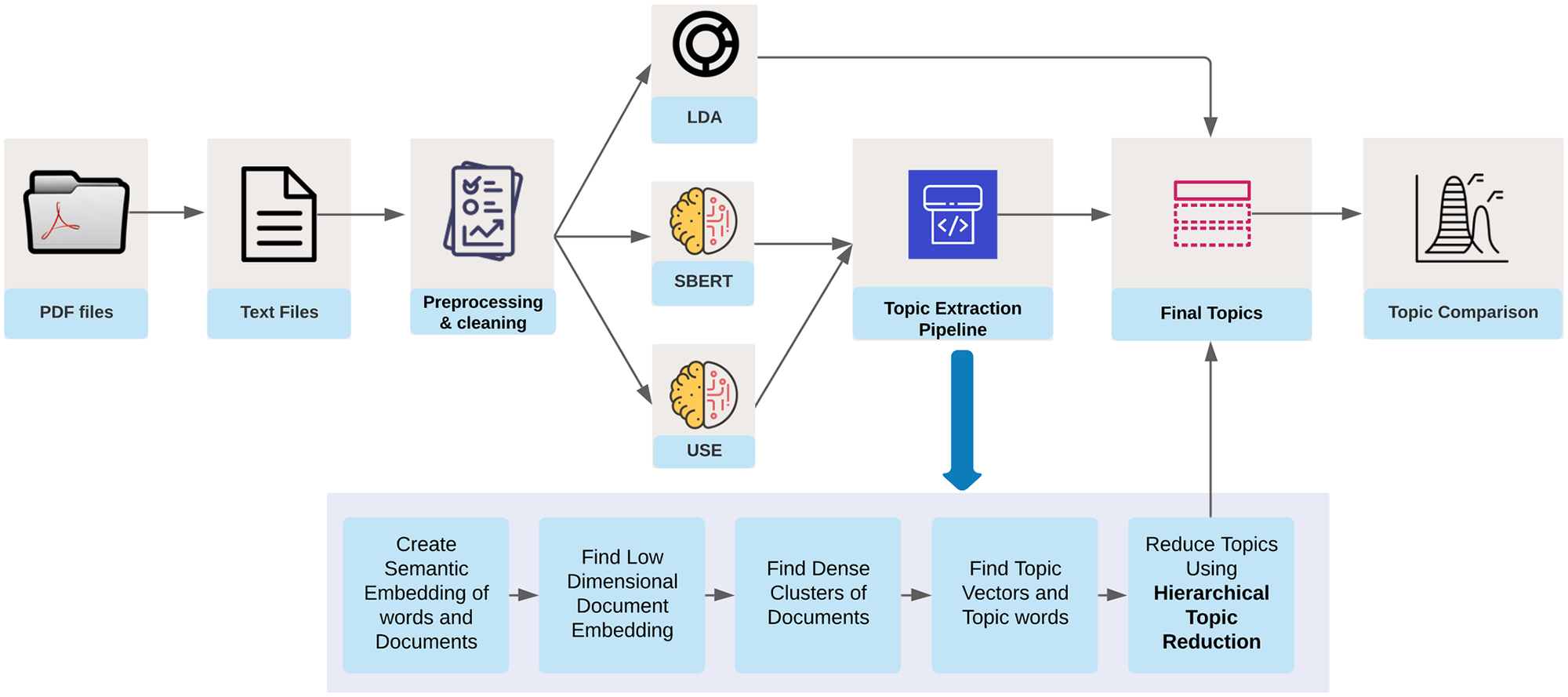
Artificial Intelligence for Topic Modelling in Hindu Philosophy
Mukul Ranjan* and Rohitash Chandra* PLOS ONE, 2022 paper |
|
Last updated: September 2026
|